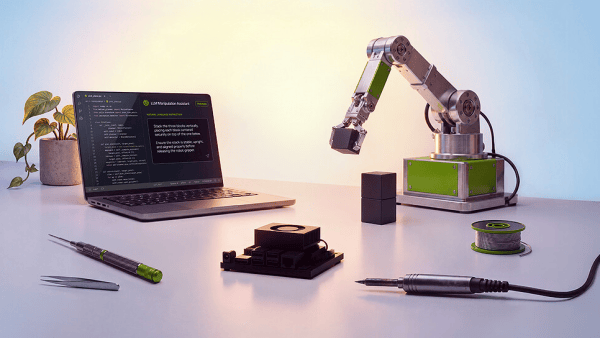
Modern woodworking is undergoing a digital revolution, blending AI-driven safety systems and robotics with traditional craftsmanship for better efficiency.
The image of a lone woodworker hunched over a manual lathe in a dust-filled workshop is rapidly becoming a relic of the past. Today, the scent of fresh pine is increasingly accompanied by the hum of high-performance servers and the rhythmic clicking of CNC routers. The woodworking industry is currently navigating a profound digital transformation, in which artificial intelligence, robotics, and smart safety systems are not just accessories but essential partners in the creative process.
Safety First: The AI Sentinel
Perhaps the most impactful shift is occurring in the realm of safety. Woodworking has historically been one of the most hazardous trades, with high-speed blades posing constant risks. However, a new generation of “smart” machinery is changing the stakes. As highlighted by recent BBC reports, AI-powered camera systems are now being deployed to monitor hand proximity to blades. Unlike traditional mechanical guards, these systems use computer vision to identify potential accidents before they occur, triggering instant braking mechanisms.
This movement toward zero-injury environments is also being pushed by regulatory shifts. In the United States, for instance, the Consumer Product Safety Commission (CPSC) has proposed mandates that would require all new table saws to include blade-braking technology, a move that could prevent thousands of amputations annually.
From Workshops to Microfactories
Automation is also moving from large-scale industrial plants into smaller, local workshops. Modular “microfactories” are now a reality, utilizing robotics to produce timber panels directly on construction sites. This localized automation reduces the carbon footprint associated with shipping and allows for a level of customization that traditional mass production could never achieve.
The rise of accessible Computer Numerical Control (CNC) machinery has lowered the barrier to entry for complex design. These machines, often powered by intuitive software, allow craftsmen to translate digital sketches into precise physical realities. By automating the repetitive, high-precision tasks, woodworkers can dedicate more time to the artistic finishing touches that define bespoke furniture.
The AI Design Assistant
Beyond the physical tools, generative AI is infiltrating the design phase. Professionals are utilizing AI image generators to create rapid prototypes and visual concepts for clients. Instead of spending hours on manual drafting for an initial proposal, a maker can generate multiple stylistic variations in seconds. Furthermore, as noted by industry analysts at Woodworking Network, large language models are becoming invaluable tools for navigating the labyrinth of local building codes and technical specifications, acting as a 24/7 digital consultant.
The Human-Analogue Balance
Despite the influx of technology, the industry remains grounded in a “human-first” philosophy. The consensus among modern artisans is that technology should augment, not replace, the tactile intuition of a master builder. There is a “digital fatigue” that many craftsmen look to avoid; while a robot can cut a perfect dovetail joint, it cannot yet replicate the “feel” of a wood’s grain or the decision-making required to handle a unique knot in a slab of walnut.
Efficiency and sustainability are also driving this tech adoption. Smart dust extraction systems now use sensors to monitor air quality and power consumption, ensuring that the workshop environment remains healthy while minimizing energy waste.
As the industry continues to evolve, the most successful woodworkers will be those who can bridge the gap between the analogue and the digital, using the precision of a computer to honor the timeless beauty of natural wood.

About the Author
Jennifer Sakmufuwo Baba is a tech analyst, senior staff, and writer covering artificial intelligence, cybersecurity , and emerging technologies at TechRegard. Based in Nigeria, she's passionate about translating complex tech developments into compelling, accessible stories for diverse audiences. Her work focuses on how technology shapes innovation across Africa and globally.