

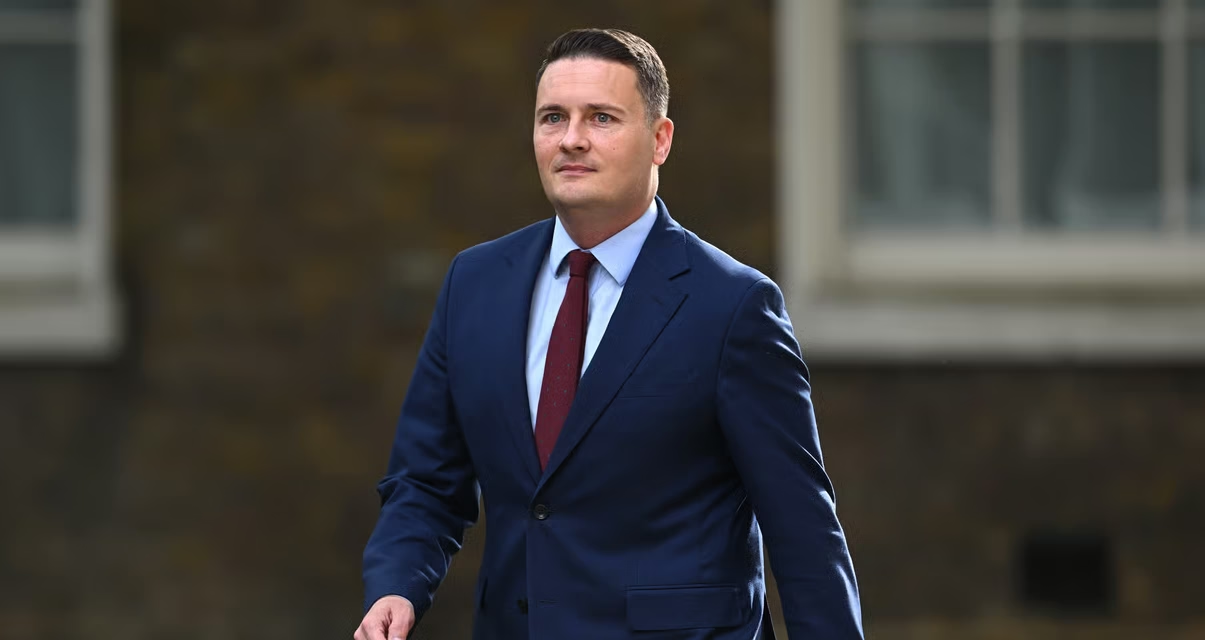
The personal phone number of UK Defence Secretary Wes Streeting has been found online, exposing a potential security risk for one of the country’s most senior officials following a scam targeting Prime Minister Andy Burnham.
The discovery came after a texting scam involving Prime Minister Andy Burnham, who exchanged messages with a person pretending to be Susie Wiles, Donald Trump’s White House chief of staff.
A news agency said it uncovered Streeting’s number while checking the publicly available contact details of Cabinet ministers after Burnham was contacted by a person posing as Susie Wiles, Donald Trump’s White House chief of staff.
The publication also found the personal numbers of Justice Secretary Alex Norris and Northern Ireland Secretary Chris Bryant online.
The publication did not reveal where the numbers were found, citing security concerns.
Streeting’s number has since been removed from the website where it was found, while officials are working to have the other two numbers taken down.
According to reports, the three ministers have declined to comment on the report.
See also: Like Nigeria, South Sudan Moves to Go Cashless
A UK government spokesperson said the government had procedures in place to protect sensitive information.
But Prerana Joshi, a research fellow at the Royal United Services Institute, warned that publicly available phone numbers could create security risks.
She said exposed numbers could be used by cybercriminals or other malicious actors to impersonate officials, make fraudulent calls or target people connected to them.
The concerns have grown following the incident involving Burnham, although it remains unclear how the person behind the scam obtained the prime minister’s number.
Downing Street has declined to comment on the exchange, citing national security. A person briefed on the matter said only a few messages were exchanged after Burnham entered No. 10 and described them as having been of no significance.
A White House official also said the incident was not connected to a hack of Wiles’ devices.
The incident has nevertheless raised questions about how senior politicians handle direct communications, particularly as they take on roles that expose them to foreign governments, officials and other high-profile individuals.
A former national security adviser said Burnham should get into the habit of having his security team verify the identity of people contacting him.
The former adviser said a simple call to the White House could have established whether Wiles was actually communicating with the prime minister.
Former Defence Secretary Ben Wallace, who was himself targeted by imposters in 2022, said the incident showed that hostile actors were constantly looking for weaknesses in official communications.
Wallace warned that sensitive information could potentially be obtained from seemingly harmless conversations.
He also pointed to the growing use of technology such as AI voice cloning, saying impersonation attempts could become more common as the technology improves.
Not everyone believes the prime minister should tighten access to him.
Guto Harri, a former communications director to Boris Johnson, said the incident would only become a serious problem if sensitive information had been disclosed.
He argued that politicians should still be able to communicate directly with people without every conversation being filtered through civil servants.

About the Author
Cecilia Attah is a tech analyst with a degree from Benue State University. She covers tech news and startups at TechRegard with a focus on how technology is transforming Africa and shaping the global landscape.


