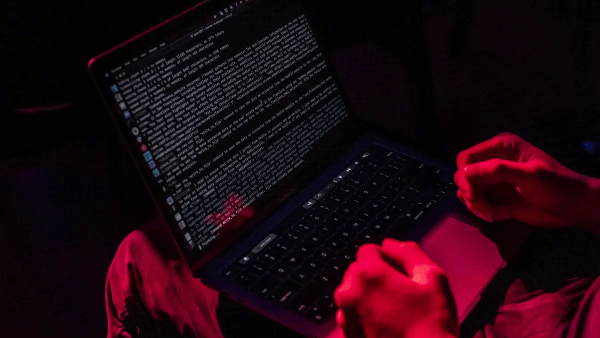
Iran exploited global cellular networks and mobile ad databases to track U.S. military personnel during recent Middle East hostilities.
In a dramatic revelation of modern electronic warfare, a sophisticated cyber-espionage campaign has exposed critical blind spots in the personal communications security of Western armed forces. First reported by the Financial Times on Tuesday, July 14, 2026, intelligence data reveals that the Iranian government systematically abused long-standing, global telecommunications vulnerabilities to track the precise physical locations of U.S. military personnel and private defense contractors. The covert tracking campaign operated directly across regional mobile networks in key Middle Eastern host nations, including Bahrain, Iraq, and Kuwait, allowing adversaries to build a real-time geographic map of American military assets. This silent digital dragnet demonstrates how geopolitical rivals can easily bypass heavily fortified physical perimeters simply by targeting the everyday consumer devices tucked into the pockets of active-duty soldiers.
The mechanics explain why and how Iran successfully executed this surveillance center on two highly accessible, low-barrier technology vectors. The primary vector targeted Signaling System No. 7 (SS7), a foundational telecommunications routing protocol designed in the 1970s to facilitate seamless global roaming. Because SS7 lacks modern authentication guardrails, any cellular provider with valid roaming agreements can send localized “pings” to query the network location of a specific device. Exploiting these arrangements, state-backed Iranian operators flooded regional Middle Eastern networks with targeted location queries. To complement this network-level tracking, Iranian intelligence also harvested commercial advertising databases. By purchasing or monitoring the software development kits embedded inside standard smartphone applications, they analyzed the unique advertising identifiers and digital footprints of devices operating within restricted military zones and hotels.
See Also: Telegram’s t.me Shortlink Domain Restored After Accidental Registry-Level Block
The timeline of the operation indicates that this coordinate tracking peaked in the tense weeks building up to the joint U.S.-Israeli military strikes against Iran in late February, continuing through the initial phase of the resulting regional conflict. During this high-intensity window, Iran and its proxy networks launched waves of missile and drone strikes targeting facilities housing Western personnel. In several instances, the strikes successfully hit commercial hotels in Iraq and Bahrain, where the U.S. Navy’s Fifth Fleet is headquartered, raising urgent concerns among security planners that the digital targeting data directly informed physical battlefield operations. While Pentagon officials have played down the concrete impact of the tracking on specific casualties, they admit the threat was severe enough to prompt unprecedented force-protection protocols. The security crisis has rapidly caught the attention of global security watchdogs and policymakers, who argue that the military’s exposure through commercial data is an unacceptable vulnerability. Ultimately, the breach confirms that as long as soldiers carry commercial smartphones, the boundaries of the digital battlefield will remain entirely transparent.

About the Author
Jennifer Sakmufuwo Baba is a tech analyst, senior staff, and writer covering artificial intelligence, cybersecurity , and emerging technologies at TechRegard. Based in Nigeria, she's passionate about translating complex tech developments into compelling, accessible stories for diverse audiences. Her work focuses on how technology shapes innovation across Africa and globally.