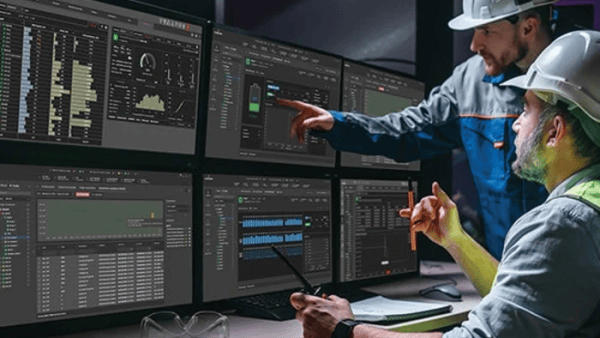
Video game startup General Intuition secures $320M at a $2.3B valuation to train real-world robotics using gameplay action data.
For decades, video games have served as a playground for artificial intelligence, testing the limits of virtual bot capabilities in closed systems. However, a New York-based startup is turning that dynamic on its head. Spun out from the video game clip-sharing platform Medal, General Intuition has secured $320 million in a new funding round, skyrocketing its valuation to $2.3 billion just months after its initial seed launch.
The company’s underlying thesis is bold: the exact button presses and human decisions captured in millions of hours of first-person gameplay hold the missing key to teaching physical robots how to safely navigate the real world.
The Secret Weapon: True Action Labels
Most conventional AI models are trained purely on passive consumption, scraping pixels from video platforms like YouTube or parsing giant walls of text. According to General Intuition’s co-founder and CEO, Pim de Witte, that approach misses a vital component: causality.
By drawing data directly from Medal, which sees roughly 2 billion gameplay clips uploaded annually by 10 million monthly active users, General Intuition feeds its neural networks explicit data tracking exactly when a player pushes a button and what visual frame changes as a direct consequence. This structured tracking allows the model to differentiate between “self” and “environment.”
The startup uses this interactive loop to build DIAMOND, a diffusion-based world model. Rather than compressing visuals into static text tokens, DIAMOND predicts future frames natively. In deep-dive office demonstrations, these world models proved they could intuitively recognize that walls are solid, ladders are meant for climbing, and shadows change dynamically based on moving light.
See Also:https://www.techregard.com/anthropic-siphons-paying-consumers-from-chatgpt/
From Fortnite to the Factory Floor
Critics often note that video games rely on ultra-clean simulation rules that fall apart on a chaotic factory floor. While collision detection in a game engine is mathematically flawless, real-world deployments must wrestle with shifting light, physical friction, bad weather, and human unpredictability.
However, General Intuition counters this argument with the power of sheer scale. By distilling hundreds of millions of human decisions made under pressure inside complex, multi-tiered virtual landscapes like Fortnite, the AI builds foundational spatial-temporal reasoning (the understanding of how things move across space and time).
The transferability of this virtual training into physical utility is surprisingly fast. In demonstrations, a model trained on 100 hours of gameplay was embedded into a physical, quadrupedal “robot dog.” To adapt the machine to an entirely new real-world office environment filled with cluttered chairs and moving obstacles, the team only needed to fine-tune the model with eight minutes of real-world street data.
Scaling Up and Keeping It Safe
The heavyweight funding round was led by Khosla Ventures, alongside high-profile tech figures like Jeff Bezos, Eric Schmidt, General Catalyst, and prominent AI researchers from Google DeepMind and MIT. To fuel its compute-heavy ambitions, General Intuition has forged an infrastructure partnership with CoreWeave to secure thousands of highly sought-after GPUs.
Rather than competing with game studios or manufacturing its own hardware line, General Intuition intends to operate as a foundational layer. The company is building an enterprise API and launching a consumer ecosystem named Nerve, which allows players to earn money by assisting with data labeling and remote robot operation. The final developer platform is scheduled for release by late summer 2026, aiming to provide an operational “brain” for autonomous vehicles, delivery drones, and warehouse automation.
Notably, de Witte, who spent three years working globally with Doctors Without Borders, has instituted rigid ethical guardrails. The startup explicitly refuses to deploy its navigation agents for applications involving lethal autonomy or military aggression, focusing instead on commercial logistics, household robotics, and industrial search-and-rescue.
Key Information Summary
| Metric / Detail | Value |
| New Funding Amount | $320 Million |
| Current Valuation | $2.3 Billion |
| Total Raised to Date | $454 Million |
| Lead Investor | Khosla Ventures |
| Data Source Foundation | Medal (2B clips annually) |
| Target Launch Date | Late Summer 2026 |

About the Author
Jennifer Sakmufuwo Baba is a tech analyst, senior staff, and writer covering artificial intelligence, cybersecurity , and emerging technologies at TechRegard. Based in Nigeria, she's passionate about translating complex tech developments into compelling, accessible stories for diverse audiences. Her work focuses on how technology shapes innovation across Africa and globally.