Hackers use fake student resumes with hidden executables to sneak remote control malware onto researchers’ computers.
Cybersecurity researchers have issued an urgent warning after discovering that malicious hackers are using fake student resumes to secretly infect computers with dangerous remote-control software.
Scammers are sending out job application emails that look like normal, innocent documents written by hopeful university students looking for research positions or internships.
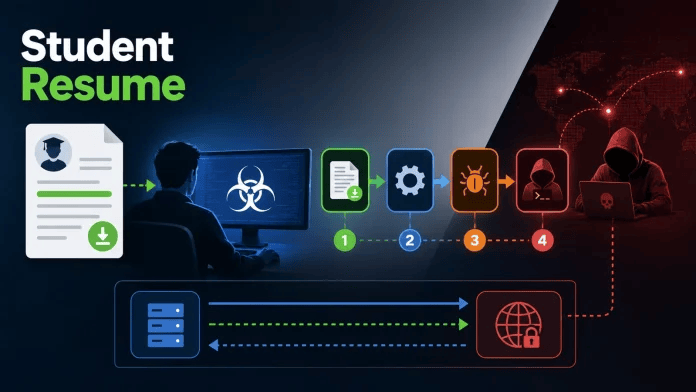
However, when unsuspecting victims open the attached file or download the document from online storage, a hidden computer program secretly installs itself in the background.
Once inside, the virus grants online thieves full access to spy on private files, steal passwords, and control the infected computer from anywhere in the world.
The dangerous digital security warning was formally published in online security reports on August 28, 2026, after cyber analysts tracked fresh infection campaigns targeting academic institutions and corporate research labs.
Security experts at Cybersecurity News documented how attackers specifically designed these fake job applications to sneak past regular email filters and target Windows computers.
Because academic researchers, university professors, and office hiring managers regularly receive and open resumes from students every day, bad actors knew victims would naturally click on the documents without suspecting any danger.
The main reason this sneaky trick is working is that hackers are hiding executable application files directly inside what appears to be a normal document file.
When a recipient double clicks the resume to read the student’s background, the system opens a decoy document on the screen while silently extracting a hidden remote access program into system folders.
See Also: Critical cPanel Vulnerability Exposes Millions of Websites to Full Administrative Takeove
This allows bad actors to bypass regular antivirus safety checks, set up automatic startup commands, and establish a quiet connection to their offsite hacking servers.
Explaining how cybercriminals are using fake applicant profiles to trick computer users and install remote control tools, cybersecurity analyst Tushar Subhra Dutta reported that “a fake student resume is being used to place a remote-access tool on researchers’ Windows computers”.
Detailing how the bad software hides its true intentions by concealing real executable code inside innocent file formats, Tushar Subhra Dutta added that “the campaign hides a Windows executable inside” the fake application materials to quietly establish full remote access over target devices.
Warning recruiters and academic workers to stay alert when opening unexpected emails from unfamiliar senders, cybersecurity research teams at Cybersecurity News emphasized that threat actors are continuously leveraging social engineering lures to deploy silent remote control programs across Windows environments.
By bringing awareness to fake student resume scams, security teams are helping office workers and researchers stay safe from hidden computer viruses.
Verifying unknown file attachments, double-checking email sender details, and keeping antivirus programs updated ensures that private research stays secure and protected from sneaky online thieves.

About the Author
Jennifer Sakmufuwo Baba is a tech analyst, senior staff, and writer covering artificial intelligence, cybersecurity , and emerging technologies at TechRegard. Based in Nigeria, she's passionate about translating complex tech developments into compelling, accessible stories for diverse audiences. Her work focuses on how technology shapes innovation across Africa and globally.