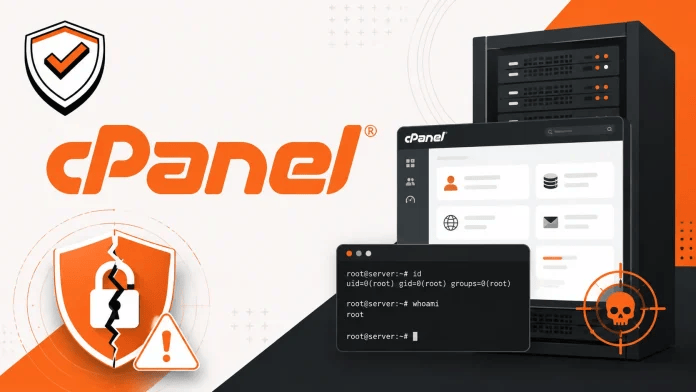
A critical cPanel flaw lets hackers bypass logins and take full root control of server networks hosting millions of websites.
Cybersecurity experts have issued an urgent warning after discovering a severe security flaw inside cPanel and WebHost Manager (WHM), two of the world’s most popular web server management programs.
Tracked as CVE-2026-41940, the critical bug gives online attackers a direct backdoor into server networks. By exploiting the flaw, malicious hackers can completely bypass login screens without typing a single password or username.
Once inside, bad actors gain full administrative master controls over entire web hosting platforms, allowing them to steal private customer data, install hidden backdoors, or shut down websites completely.
The dangerous technology warning was highlighted across global cybersecurity networks as intelligence groups tracked active hacking attempts targeting unpatched hosting providers.
Because cPanel and WHM software power tens of millions of active websites and online databases worldwide, national security agencies immediately flagged the flaw as an extreme threat to global internet infrastructure.
Web hosting companies, data centers, and server administrators across North America, Europe, Asia, and Africa were urged to apply emergency software updates to prevent malicious takeovers.
The primary reason this security flaw is so dangerous is that it grants root-level administrative access to an entire web server rather than just a single account.
In a shared hosting environment where hundreds or thousands of separate small business websites live on one physical machine, a single unpatched entry point allows hackers to compromise every business hosted on that server all at once.
Cybercriminals have already weaponized the bug to deploy destructive ransomware, inject rogue API tokens, and connect compromised servers into automated botnet networks.
See Also:Two Australian Men Charged for Global Hacking Attacks with Syndicate TeamPCP
Explaining how bad actors can skip password checks to seize total control over web hosting servers, security research analysts at watchTowr Labs noted that the flaw allows remote attackers to manipulate server request parameters, adding that “the software can be tricked into thinking an attacker is already logged in as an administrator, granting full access without authentication”.
Warning about the immense damage a single server breach can cause to multiple business websites sharing the same machine, Canada’s national cybersecurity agency highlighted the severity of the flaw, stating that “exploitation is highly probable” and urging all system administrators to apply emergency patches immediately.
Confirming that malicious threat actors moved fast to weaponize the vulnerability after it was discovered, security researchers at Censys revealed that the flaw was being actively exploited across global networks, emphasizing that “cPanel vulnerability is being weaponized by multiple third-parties within 24 hours of public disclosure”.
By releasing fast software patches and blocking vulnerable ports, cPanel developers and major hosting providers are working hard to secure online servers.
Server owners and website managers must install the latest official software updates immediately to keep their databases safe, protect user passwords, and defend their digital businesses from unauthorized online takeovers.

About the Author
Jennifer Sakmufuwo Baba is a tech analyst, senior staff, and writer covering artificial intelligence, cybersecurity , and emerging technologies at TechRegard. Based in Nigeria, she's passionate about translating complex tech developments into compelling, accessible stories for diverse audiences. Her work focuses on how technology shapes innovation across Africa and globally.