

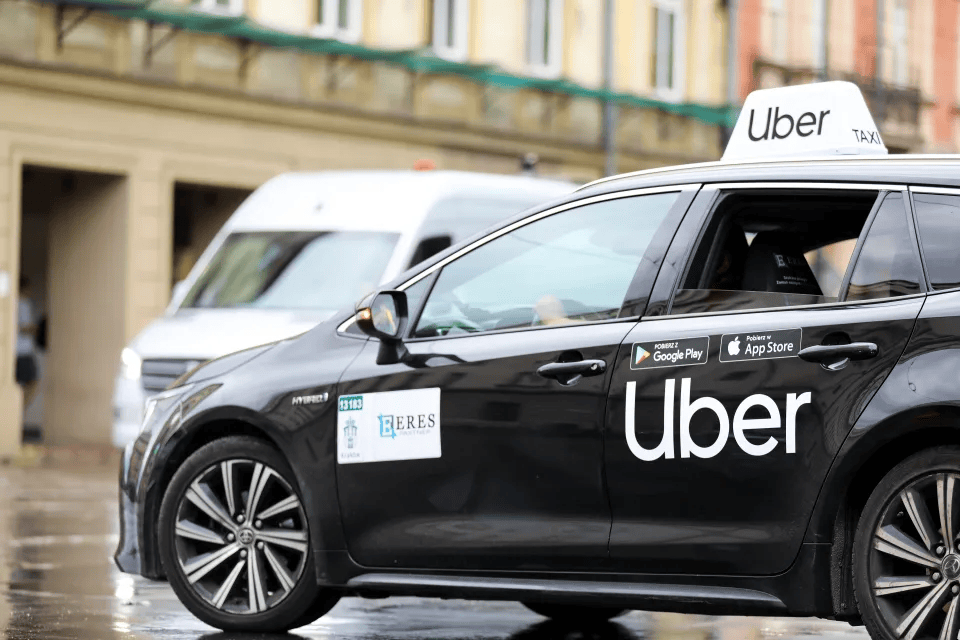
For more than a decade, Uber was part of the daily life of many Nigerians.
With a few taps, passengers could order a car, see the driver’s details, track the journey and receive an electronic receipt, while thousands of Nigerians found a new way to earn a living behind the wheel.
That chapter ended on September 2, 2026, when Uber shut down its ride-hailing operations in Nigeria after 12 years, bringing to a close a journey that began in Lagos in 2014 and later spread to Abuja and other cities.
The company said the decision followed a review of its “evolving business priorities and investment focus” across Africa. Uber did not identify one specific problem that forced it out of Nigeria and stressed that its departure from the country was unrelated to the recent directive by the Federal Airports Authority of Nigeria, FAAN, concerning e-hailing services at airports.
Uber also exited Uganda at the same time, but said its decision was limited to the two countries and did not affect its wider operations in Africa.
In an email to Nigerian users, the company said: “After a thorough review of our business, we have made the tough decision to wind down our operations in Nigeria, effective 2 September 2026.”
The departure, however, is about more than the disappearance of one app. It offers a rare opportunity to examine how Nigeria’s ride-hailing market evolved, why the economics became increasingly difficult and whether Uber’s experience says more about Nigeria, the company’s strategy, or the future of mobility itself.
The company that changed how Nigerians moved
When Uber arrived in Lagos in 2014, ordering a car with a smartphone was still a novelty.
Its proposition was simple but transformative: passengers no longer had to stand by the roadside searching for a taxi, while drivers could use technology to find customers.
The response was swift. By July 2016, Uber said it had completed more than one million trips in Lagos, with vehicles on its platform travelling about nine million kilometres. It expanded to Abuja in March that year, making the capital its 400th city globally, and later moved into Benin City, Ibadan and Port Harcourt while introducing services such as UberGo, Uber Package and Uber Moto.
At the Abuja launch, fares such as N650 from Maitama to Asokoro and N800 from Wuse 2 to Gwarinpa were advertised — prices that now offer a striking reminder of how dramatically transportation economics have changed.
By 2017, Uber reported 267,000 active riders and 7,000 driver-partners in Nigeria, while its 2023 economic impact report estimated that the platform contributed N34 billion to the economy and generated N6.1 billion in driver income that year. Those figures were based on research commissioned by Uber, but they nevertheless illustrate how deeply the platform had become embedded in the urban economy.
More importantly, Uber changed what Nigerians expected from transportation. A passenger could know who was coming, follow the vehicle, rate the driver and receive a record of the trip, turning convenience, visibility and accountability into essential parts of the ride-hailing experience.
But the same market that welcomed Uber eventually became much harder to navigate.
When the economics stopped adding up
Nigeria’s transportation landscape changed dramatically during Uber’s 12-year stay. Fuel prices surged following the removal of petrol subsidies in 2023, the naira weakened, inflation pushed up the cost of spare parts and maintenance, while passengers simultaneously became less able to absorb higher fares.
For drivers, the arithmetic became increasingly unforgiving. A fare that might look reasonable to a passenger could become unprofitable once fuel, platform commission, maintenance, depreciation and time spent in traffic were deducted.
The strain culminated in a three-day e-hailing drivers’ strike in Lagos in March 2026 involving Uber, Bolt, inDrive and LagRide, with drivers protesting low fares, rising operating costs and working conditions. One driver cited during the dispute said he earned N21,200 from trips, spent N13,500 on fuel and had N5,300 deducted as commission, leaving N2,400 before other expenses.
See also: BREAKING: Uber to Leave Nigeria After 12 Years
That episode exposed the central contradiction at the heart of Nigerian ride-hailing: passengers want cheaper journeys, drivers need higher earnings and platforms need enough revenue to remain commercially viable. The three interests can coexist when the market is healthy, but become increasingly difficult to balance when operating costs rise faster than purchasing power.
Was Nigeria the problem or Uber?
It would be tempting to blame the exit entirely on Nigeria’s difficult economy, but the evidence does not support such a simple conclusion.
Some Nigerians have argued that Uber itself failed to adapt sufficiently to the local market, pointing to competitors that operate under the same inflationary, fuel and regulatory pressures.
Bolt and inDrive, for instance, have continued to compete aggressively, with inDrive’s fare-negotiation model particularly attractive to price-sensitive users.
Other concerns have also surfaced, including reports and social-media complaints that some drivers ask passengers to cancel app bookings and complete trips privately, allowing them to keep the entire fare while the platform loses its commission. Uber has not identified such practices as a reason for its departure, but the issue highlights a fundamental vulnerability of digital marketplaces: a company can spend heavily to bring a passenger and driver together only for both sides to take the transaction offline.
Payment localisation has also been part of the debate, with The Guardian reporting that Uber’s refusal to implement cash payments frustrated some riders in a country where cash remains important, raising a broader question about how far global technology models must adapt to local consumer behaviour.
Then came regulation. Safety, licensing, taxation, driver verification and security are legitimate concerns for authorities, but operators and drivers have also complained that regulatory requirements can increase costs.
The controversy over e-hailing services at Nigerian airports fuelled speculation that it contributed to Uber’s exit, although Uber explicitly rejected that interpretation and said its decision was unrelated to the Federal Airports Authority of Nigeria directive.
The fairest conclusion, therefore, is that Uber left without publicly identifying one decisive cause. Nigeria’s economic pressures may have made the market less attractive, but the company was also reassessing its global priorities and business strategy.
The timing that raises a bigger question
Perhaps the most striking part of Uber’s departure is what happened almost immediately afterwards.
Just one day after ending its Nigerian operation, Uber launched supervised autonomous rides in London with British self-driving technology company Wayve.
The service uses autonomous Ford Mustang Mach-E vehicles, although a licensed human safety operator remains in the vehicle while regulatory approval for fully driverless operations is pursued.
The timing does not prove that the two developments are connected, and Uber has not said that its Nigerian exit was driven by a shift towards autonomous vehicles.
Yet the contrast is difficult to ignore.
In Nigeria, the central struggle remains fuel, fares, commissions, driver welfare and purchasing power; in London, Uber is testing a model in which the driver may eventually disappear altogether.
That reflects a broader transformation in the global mobility industry. Uber is increasingly working with autonomous-vehicle partners rather than developing the technology entirely on its own, while Waymo, Tesla and Chinese companies continue to push the robotaxi market forward. If autonomous vehicles become commercially viable, removing the driver could fundamentally alter the cost structure of ride-hailing.
For Nigeria, however, that future remains distant.
Inconsistent road infrastructure, unreliable electricity, limited charging networks, mapping challenges, regulation and the cost of autonomous vehicles all present major obstacles, while the social consequences could be even more significant in a country where thousands depend on driving for income.
Who fills the space Uber left behind?
The immediate beneficiaries are likely to be competitors such as Bolt, inDrive and LagRide, all of which now have an opportunity to capture Uber’s riders and drivers. But the departure does not mean the market has suddenly become easy.
The remaining platforms inherit the same fuel prices, maintenance costs and purchasing-power constraints that contributed to the industry’s problems. If they raise fares, passengers may leave; if they keep fares low, drivers may continue to protest; and if they cut commissions to attract drivers, their own margins could suffer.
The bigger opportunity may therefore belong to Nigerian entrepreneurs.
Uber’s departure has not removed the ingredients of the market. The drivers remain, the cars remain, the passengers remain and the need for convenient transportation remains. What has disappeared is one major intermediary connecting them.
That creates room for local platforms, driver-owned businesses and specialised mobility companies, whether in corporate transportation, airport transfers, logistics, school transport, inter-city travel or vehicle financing. Nigerian drivers had already been considering locally controlled ride-hailing platforms following the March strike, particularly models that would give them greater influence over fares, commissions and operating policies.
But building another app will not be enough. The real challenge is creating a sustainable marketplace that can handle customer acquisition, fraud, insurance, safety, payments, driver verification, mapping and profitability.
The road beyond Uber
The future of Nigerian ride-hailing may ultimately depend less on which company owns the biggest app and more on how cheaply and efficiently a vehicle can operate.
That puts energy and vehicle financing at the centre of the conversation. CNG offers one possible route to reducing fuel costs, although conversion remains expensive, with one Lagos driver estimating the cost of converting a Toyota Corolla at between N800,000 and N1 million. Electric vehicles could eventually provide another alternative, but they require reliable electricity, charging infrastructure and affordable financing.
At the heart of all these challenges is a simple economic problem: Nigeria has a huge transportation need, but that does not automatically translate into a huge profitable ride-hailing market.
A population of more than 200 million means little if too few people can regularly afford fares high enough to cover fuel, maintenance, driver earnings and platform costs. The industry therefore needs more than growing passenger numbers; it needs cheaper vehicle financing, lower operating costs, predictable regulation, stronger driver protections and business models designed around Nigerian realities.
Uber’s legacy should therefore not be measured only by its exit.
It helped normalise app-based transportation, created earning opportunities, pushed traditional taxi operators towards technology and established a digital mobility ecosystem that competitors continue to occupy. Nigerians who never used Uber were also affected indirectly as transportation became more digitised.
But its departure leaves an equally important lesson: technology alone cannot solve bad economics.
An application cannot make petrol cheaper, lower the cost of spare parts, increase household incomes or guarantee that a driver will make a profit from every trip. The future of Nigerian mobility will depend on whether those underlying problems can be addressed.
Uber’s Nigerian journey has ended, but the market that brought it here has not. The drivers are still here, the cars are still here, the passengers are still here and the demand for better transportation remains.
What has changed is the company connecting them.
And what comes next will determine whether Nigeria simply replaces Uber with another platform or finally builds a ride-hailing ecosystem that works for the passenger, the driver and the businesses that keep the wheels turning.

About the Author
Cecilia Attah is a tech analyst with a degree from Benue State University. She covers tech news and startups at TechRegard with a focus on how technology is transforming Africa and shaping the global landscape.


