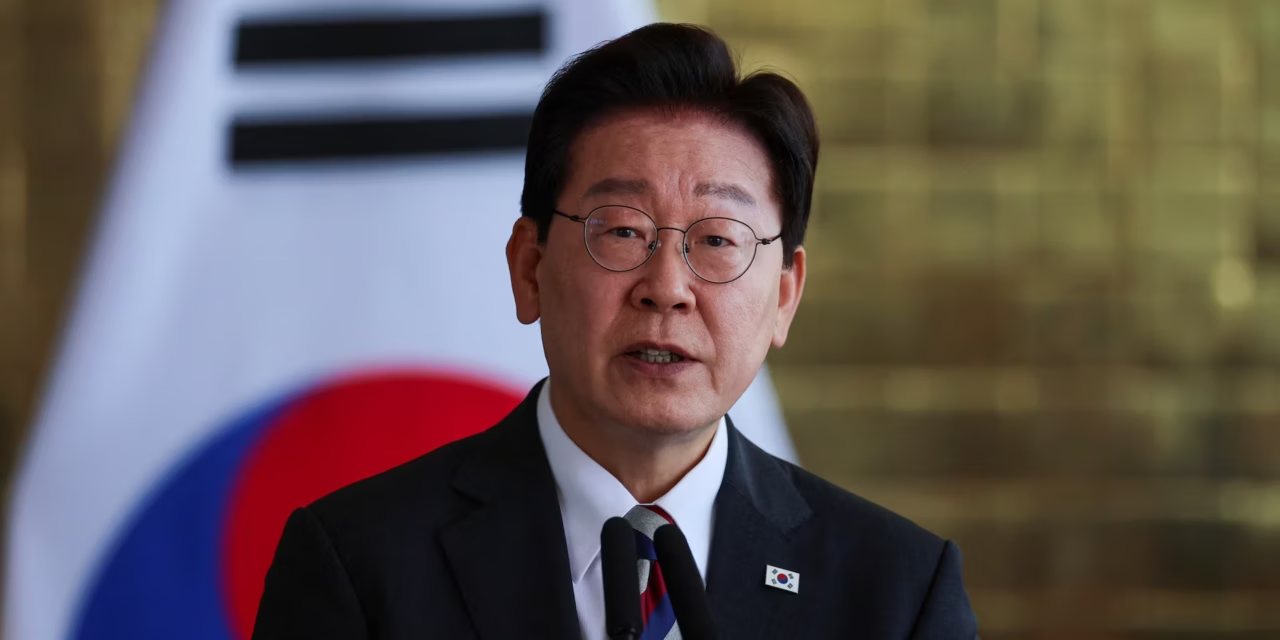
South Korea is moving to clear the infrastructure and regulatory hurdles facing its planned semiconductor hubs, as President Lee Jae Myung pushes officials to accelerate a nationwide drive to expand chip production.
The government will establish a 5 trillion won ($3.52 billion) fund to support promising semiconductor materials, components, equipment and fabless companies.
Presidential Chief of Staff Kang Hoon-sik said this in a press briefing after a meeting chaired by President Lee Jae Myung on Monday.
But the success of the programme will depend heavily on whether authorities can deliver the electricity, water and industrial facilities needed by new chip plants.
For the planned semiconductor cluster in the southwestern Gwangju-South Jeolla region, the government aims to secure 650,000 metric tons of water a day by 2030 through recycled wastewater and supplies from nearby dams.
See also: CyrusOne Eyes Public Return in Possible $5 Billion IPO
Four planned fabrication plants are expected to require about 6.3 gigawatts of electricity, with officials considering power from the Hanbit nuclear plant, renewable sources and possibly an on-site liquefied natural gas facility.
The government’s latest plan also includes a 10-year, 1 trillion won programme to encourage cooperation between major chipmakers and smaller suppliers in research, testing and production.
Lee even instructed the Defence Ministry to relocate functions of a military air base in Gwangju by mid-2028, clearing the way for a proposed industrial complex covering about 8.3 million square metres.
The administration is also seeking parliamentary approval this year for a Mega Special Zone Act; this legislation would aim to shorten permitting, environmental reviews and infrastructure construction for large industrial projects.
A separate semiconductor cluster in Yongin, south of Seoul, is expected to require 14.7 gigawatts of electricity by 2041. The government plans to combine cogeneration facilities, liquefied natural gas generation and power transferred from other regions to meet the demand.
South Korea has made expanding chip capacity a central part of its industrial policy as demand for advanced memory and computing infrastructure grows.
Officials have warned, however, that securing power, water and permits will be critical to keeping the projects on schedule.

About the Author
Cecilia Attah is a tech analyst with a degree from Benue State University. She covers tech news and startups at TechRegard with a focus on how technology is transforming Africa and shaping the global landscape.