

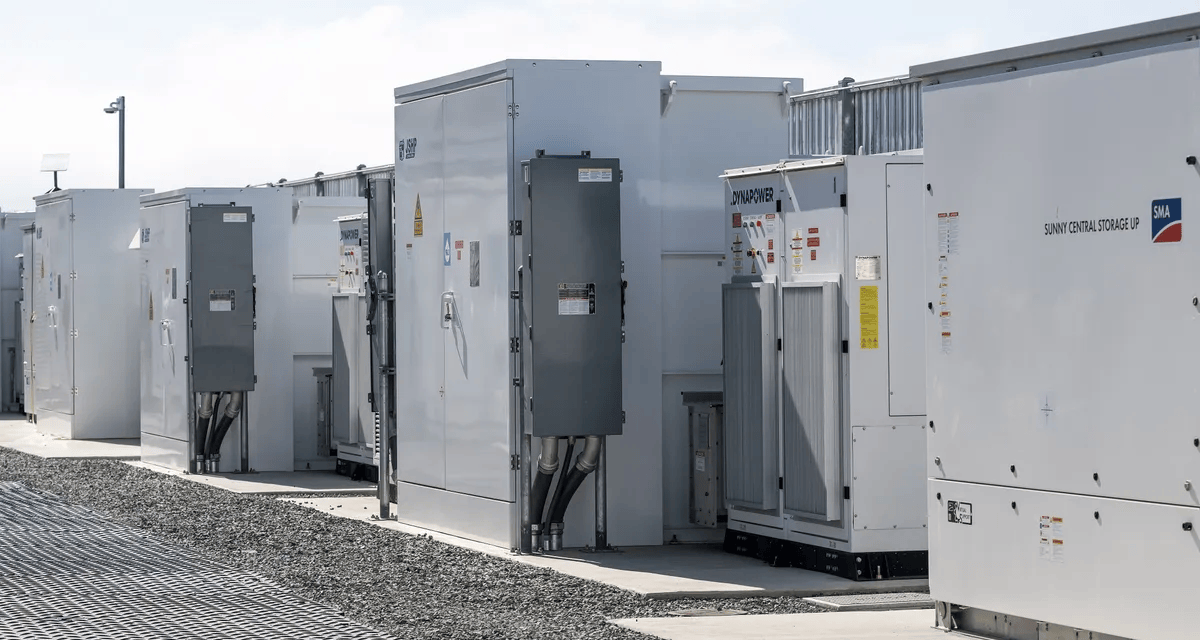
Google and Meta invest in long-duration battery storage to supply steady clean power to electricity-heavy AI data centers.
Google and Meta Platforms have begun investing heavily in long-duration energy storage systems to ensure their AI data centers receive continuous clean electricity day and night.
Running advanced AI software requires massive computer server farms that draw huge amounts of electrical power without stopping.
While renewable energy sources like solar panels and wind turbines generate clean electricity, they only produce power when the sun shines or the wind blows.
To bridge this gap, tech companies are moving beyond standard lithium-ion batteries, which typically run out of charge after 4 hours, and backing new multi day battery systems capable of discharging continuous electricity for up to ten or even one hundred hours.
The strategic energy investments were detailed across global technology and financial news reports on Friday, September 18, 2026.
Under recent clean energy agreements, Google partnered with utility operator Salt River Project in Arizona to help fund a 10 hour carbon dioxide battery system built by storage startup Energy Dome.
Meanwhile, Meta entered a major deal with long duration storage firm Noon Energy to secure up to one gigawatt of storage capacity totaling 100 gigawatt hours.
These multi day storage systems are being deployed across major data center hubs in the United States and international markets, where tech giants are building new server facilities to power next-generation software models.
The primary reason tech companies are aggressively funding long-duration battery storage right now is that traditional energy options face severe practical and environmental roadblocks.
Building new natural gas power plants directly contradicts corporate commitments to reduce carbon emissions, while long manufacturing delays make ordering new gas turbines extremely slow.
See Also: Palantir Hires Former UK Labour Deputy Tom Watson as NHS Data Contract Faces Cancellation Scrutiny
At the same time, simply stacking standard 4 hour lithium-ion batteries cannot cover several consecutive cloudy or calm days when renewable power drops.
Investing in advanced long-duration technologies allows tech companies to store excess renewable power when generation is high and release it during low-generation periods, keeping AI data centers running cleanly without overloading regional power grids.
Explaining why standard short duration power storage is no longer sufficient to support massive artificial intelligence infrastructure, Meta Head of Clean Energy and Renewable Resources Amanda Yang stated that “four-hour energy storage ultimately has its limits”.
Detailing why large-scale adoption of multi-day storage will soon make clean power far more affordable for technology facilities, Amanda Yang added that she believes “once long-duration storage is scaled up, it will become highly cost-competitive”.
Highlighting how long-duration batteries solve grid stability challenges during extended bad weather periods, energy market analysts reviewing the new investments noted that “a 100-hour duration is roughly equivalent to four days and can accommodate the low-generation periods caused by several consecutive overcast days or calm weather,” stressing that these systems provide the ideal design standard for large cloud providers.
By backing long-duration battery storage, Google and Meta are driving a major shift toward sustainable technology. Ensuring that AI data centers run on reliable, continuous clean energy guarantees that modern digital services remain fast, dependable, and environmentally friendly for users worldwide.

About the Author
Jennifer Sakmufuwo Baba is a tech analyst, senior staff, and writer covering artificial intelligence, cybersecurity , and emerging technologies at TechRegard. Based in Nigeria, she's passionate about translating complex tech developments into compelling, accessible stories for diverse audiences. Her work focuses on how technology shapes innovation across Africa and globally.


