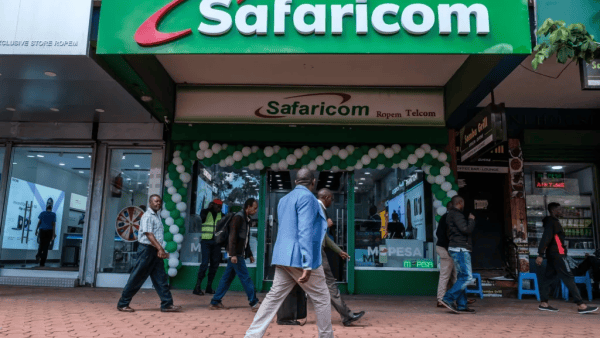
The Court of Appeal (CoA) has lifted conservatory orders that had suspended the government’s planned sale of a 15 percent stake in Safaricom to South Africa’s Vodacom, allowing the transaction to proceed.
For sovereign states across emerging digital markets state-owned or state-anchored telecommunications giants are no longer viewed merely as commercial enterprises or steady sources of dividend yield. They have evolved into critical pillars of national security. As the primary custodians of public biometric data, mobile money infrastructure and civilian communication corridors, operators like Safaricom function as the foundational digital plumbing of the state.
When a government moves to partially privatize or offload its stake in such a strategic entity to external corporate groups the transaction inevitably moves beyond simple fiscal accounting to trigger intense legal, constitutional and nationalistic pushback.
This delicate intersection of national infrastructure and state treasury needs is playing out directly in East Africa.
According to TechNext’s operational coverage of the Kenyan Court of Appeal clearing the Safaricom sale, the state has won a massive legal reprieve. The appellate court lifted conservatory orders that had frozen the government’s multibillion-shilling plan to offload a portion of its equity, allowing one of the continent’s most fiercely contested privatization maneuvers to resume.
The friction stems from Kenya’s National Treasury attempting to execute a highly strategic capital recovery plan. The government intends to sell a 15% stake in Safaricom PLC to South Africa’s Vodacom Group Ltd at an estimated value of Sh204.3 billion ($1.6 billion), priced at Sh34 per share.
If the transaction crosses the finish line, it will fundamentally rewrite the corporate power balance inside East Africa’s most profitable corporate entity. The Treasury’s holding will drop from 35% to 20%, while Vodacom’s aggregate stake will climb to 55%, officially granting the South African entity majority control.
For a cash-strapped state, the macro incentives are highly compelling; the anticipated cash injection is earmarked directly to capitalize the National Infrastructure Fund and the Sovereign Wealth Fund, providing a critical buffer for external liquidity and domestic fiscal planning.
While the National Assembly cleared the partial divestiture the transaction ran into a major legal roadblock in the lower courts. Activists and political figures filed intense constitutional petitions convincing the High Court to issue an explicit freeze on the deal.
The core of the legal opposition rests on three main structural concerns; Opponents argue that transferring majority ownership to a foreign corporate conglomerate introduces unprecedented vulnerabilities regarding the control, storage, and cross-border oversight of sensitive financial and biometric data belonging to over 40 million citizens.
The petitioners maintain that as Safaricom is a crowning public asset, offloading majority control without an exhaustive, transparent process of public engagement directly violates Kenya’s constitutional mandates.
The lawsuits challenge the transparency of the transaction mechanics, alleging that the Sh34 per share pricing severely undervalues Safaricom’s long-term intrinsic value, which they argue sits closer to Sh70 or Sh80 per share.
See also: Abay bank debuts on Ethiopia’s Bourse Main Market as Fifth Company
In reversing the High Court’s freeze, the three-judge appellate panel steered clear of ruling on whether the sale itself is constitutionally valid. Instead, the court applied a pragmatic, macroeconomic balance of harms test.
The judges concluded that the public interest compellingly favored the State, finding that maintaining a prolonged injunction inflicted severe, unquantifiable damage on the country’s broader fiscal planning and investor sentiment. The Attorney General successfully argued that the petitioners had failed to prove that allowing preparatory deal stages to proceed would cause irreversible harm.
While the legal battle over the substantive constitutional questions continues to play out in the High Court the appellate ruling gives the National Treasury the operational green light to re-engage institutional markets and structure its block trades.
As developing nations balance severe macroeconomic deficits against the defense of their sovereign tech architecture, the Safaricom resolution will set a vital precedent demonstrating whether digital-era state assets can be easily leveraged to solve immediate legacy debt and infrastructure challenges.

About the Author
Praise fortune is a tech analyst and journalist based in Nigeria, Her work serves as a vital bridge between complex corporate maneuvers and the everyday reader, breaking down high-stakes financial, regulatory, and technological shifts across the African continent into clear highly readable narratives. With a deep focus on fintech, traditional banking transformation and digital infrastructure, she have become a dedicated analyst of the architects building Africa’s digital economy.