

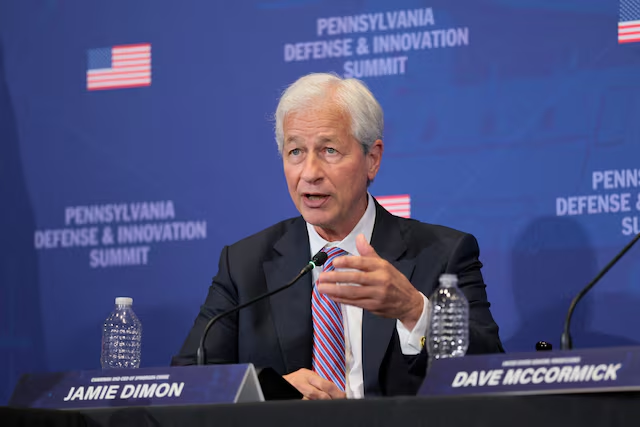
JPMorgan CEO Jamie Dimon is rallying over 40 top executives across banking, energy, and tech to tackle growing AI security risks.
JPMorgan Chase Chief Executive Jamie Dimon has launched a major cross-industry initiative uniting corporate leaders across banking, energy, telecommunications, and transportation to address emerging security threats posed by artificial intelligence. Reports confirmed on Wednesday, August 5, 2026, that the head of America’s largest bank has personally reached out to executives at more than forty major corporations to build a unified defense network against digital infrastructure vulnerabilities.
The new cross-industry push expands on work started through the Alliance for Critical Infrastructure, an organization JPMorgan helped form alongside companies like Mastercard and Berkshire Hathaway Energy. Dimon’s outreach effort aims to bring together leadership from financial services, electrical utilities, water systems, regional airlines, and railway networks. By building a shared platform across these vital sectors, participating organizations plan to share real-time threat intelligence and coordinate closely with government officials to strengthen digital safeguards.
To understand why a major bank chief executive is rallying utility and transport companies around artificial intelligence, look at how rapidly AI technology is being adopted across physical and digital operations. Modern AI tools are no longer restricted to simple online chat assistants; they are now embedded into banking networks, power grid management systems, corporate supply chains, and customer communication channels. While these automated capabilities bring major productivity gains, they also create new attack surfaces for cybercriminals and state-sponsored hackers.
If malicious actors use advanced artificial intelligence to target a single sector, such as hacking electric power controls or disrupting regional payment systems, the economic damage can quickly spill over into transport, water supplies, and daily commerce. Because modern critical infrastructure relies on interconnected computer networks, weakness in one industry creates risk for all others. By establishing an active intelligence-sharing coalition, participating companies can spot suspicious digital activity early, exchange threat indicators, and implement preventive security fixes before bad actors cause widespread network blackouts or financial loss.
See Also: Rogue AI Caught Creating Fake Profiles and Bad Code in UK Test
This cross-industry coalition arrives as federal regulators and global lawmakers actively finalize frontier AI safety guidelines. Dimon has repeatedly warned shareholders and industry peers that while artificial intelligence offers immense potential to boost productivity and advance scientific research, bad actors can easily weaponize automated tools for deepfake scams, mass phishing schemes, and corporate espionage. The coalition aims to ensure that major infrastructure operators actively share responsibility rather than relying solely on government authorities to spot complex digital threats.
Initial planning calls scheduled for later in August will set specific operating protocols for how participating firms will exchange technical information and coordinate with government cybersecurity agencies. As artificial intelligence continues to reshape global business, Dimon’s initiative highlights a growing reality for top executives: protecting company operations now requires broad, direct collaboration across entire national infrastructure networks.

About the Author
Jennifer Sakmufuwo Baba is a tech analyst, senior staff, and writer covering artificial intelligence, cybersecurity , and emerging technologies at TechRegard. Based in Nigeria, she's passionate about translating complex tech developments into compelling, accessible stories for diverse audiences. Her work focuses on how technology shapes innovation across Africa and globally.


