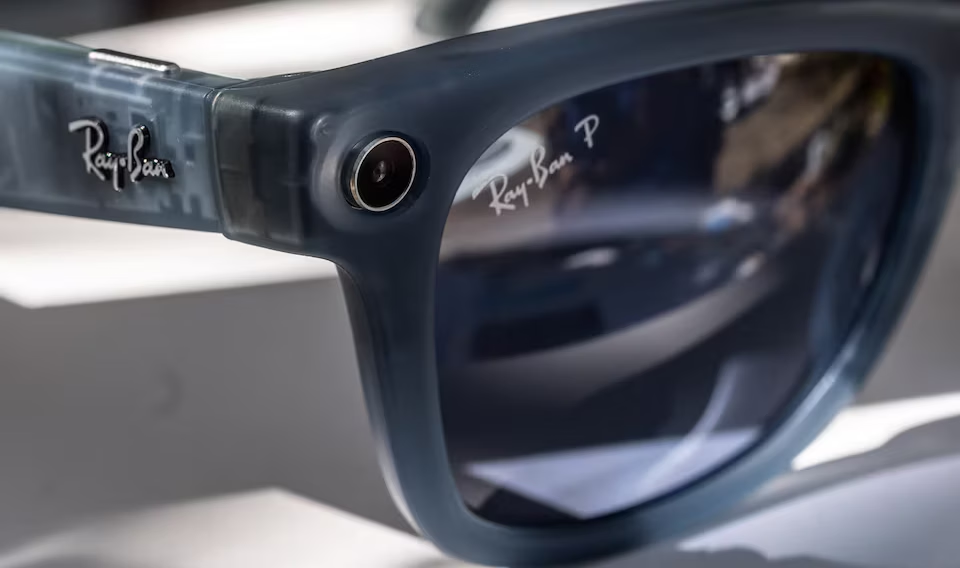
French prosecutors have opened a criminal investigation into the alleged misuse of smart glasses to film women without their consent, raising fresh concerns over privacy and abuse involving AI-powered wearable devices.
The Paris prosecutor’s office told Reuters that its cybercrime unit recently began investigating at least one case linked to a social media trend in which women are secretly recorded on the street and the videos posted online.
The prosecutors did not identify the brand of smart glasses involved but said the cybercrime unit had tested the devices to better understand how they could be used to commit crimes.
Smart glasses have come under increasing scrutiny as their popularity grows. Meta’s AI-enabled glasses, developed with EssilorLuxottica, are fitted with cameras that allow users to record images discreetly.
The devices have also prompted complaints in France over their use in workplaces. France’s data protection authority, CNIL, said it had received fewer than 10 complaints involving smart glasses and was increasingly being contacted by businesses seeking guidance on whether they could prohibit their use.
CNIL official Nacera Bekhat said the devices presented challenges in informing people that they were being recorded and obtaining consent where required.
Rights groups have also raised concerns about the ability of people to know when they are being filmed. Although the glasses have a small light that indicates when recording is taking place, campaigners say the feature does not amount to consent.
See also: Italian Apple Workers Strike as iPhone 18 Pro Goes on Sale
Meta said it had designed privacy protections into its AI glasses and would continue strengthening them as the technology develops. EssilorLuxottica declined to comment.
The concerns extend beyond France. Some cinemas in the United Kingdom have restricted the use of smart glasses over piracy concerns, while Germany has seen legal action over privacy issues. Australia is also considering restrictions on camera-equipped smart glasses in government workplaces.
AI-enabled wearable devices are subject to European Union rules, including the AI Act and the General Data Protection Regulation, which govern the use of artificial intelligence and personal data.
French law also provides penalties for recording a person’s image in a private place without consent, although authorities and rights groups say enforcement becomes more difficult when recordings are rapidly shared online.

About the Author
Cecilia Attah is a tech analyst with a degree from Benue State University. She covers tech news and startups at TechRegard with a focus on how technology is transforming Africa and shaping the global landscape.