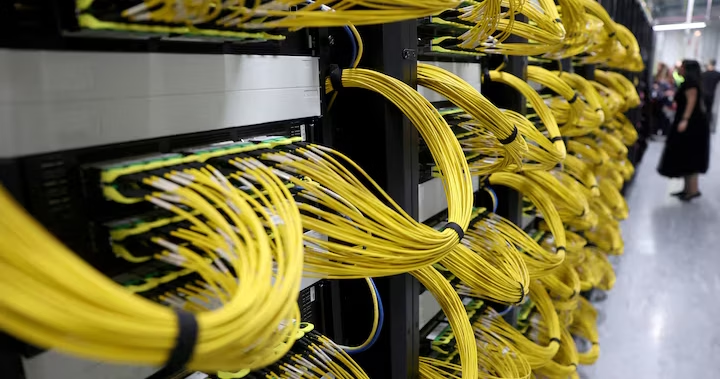
The European Union has proposed new rules requiring data-centre operators to disclose how efficiently their facilities use energy and water, as the rapid expansion of artificial intelligence puts growing pressure on resources.
The European Commission said on Monday that the proposed rules are designed to improve transparency and encourage companies to build more energy- and water-efficient data centres across Europe.
The move comes as the EU plans to triple its data-centre capacity over the next seven years to support the growth of AI and reduce its reliance on major US technology companies.
The expansion is expected to put additional pressure on Europe’s electricity grids and water supplies while potentially increasing carbon emissions if resource use is not properly managed.
Under the proposed system, data centres with a capacity of at least 500 kilowatts would be required to disclose their energy and water efficiency through an EU-designed rating and labelling system.
However, the rules would not set limits on how much energy or water a facility can consume, nor would operators be required to disclose their total electricity use.
Data-centre operators would also have to provide information on how their water consumption relates to local water stress. They would further disclose whether their facilities can support local energy systems, including through the reuse of waste heat.
The EU said the rating system could eventually pave the way for mandatory minimum standards for energy and water efficiency as authorities work on tighter rules for the sector.
See also: Facebook, Instagram Back Online After Outage Hits Thousands in US
Data centres currently account for about 2.5% of electricity consumption in the EU, according to a European Commission report published in June.
That share is expected to rise significantly as the region expands its computing infrastructure. EU data-centre capacity is projected to more than double to 28 gigawatts by 2030, from 12 GW last year.
The proposed rules are part of wider efforts to manage the environmental impact of the data-centre boom while ensuring Europe has enough computing capacity to support AI development.
EU member states and lawmakers have two months to object to the proposals. If no objection is raised, the rules will enter into force.

About the Author
Cecilia Attah is a tech analyst with a degree from Benue State University. She covers tech news and startups at TechRegard with a focus on how technology is transforming Africa and shaping the global landscape.