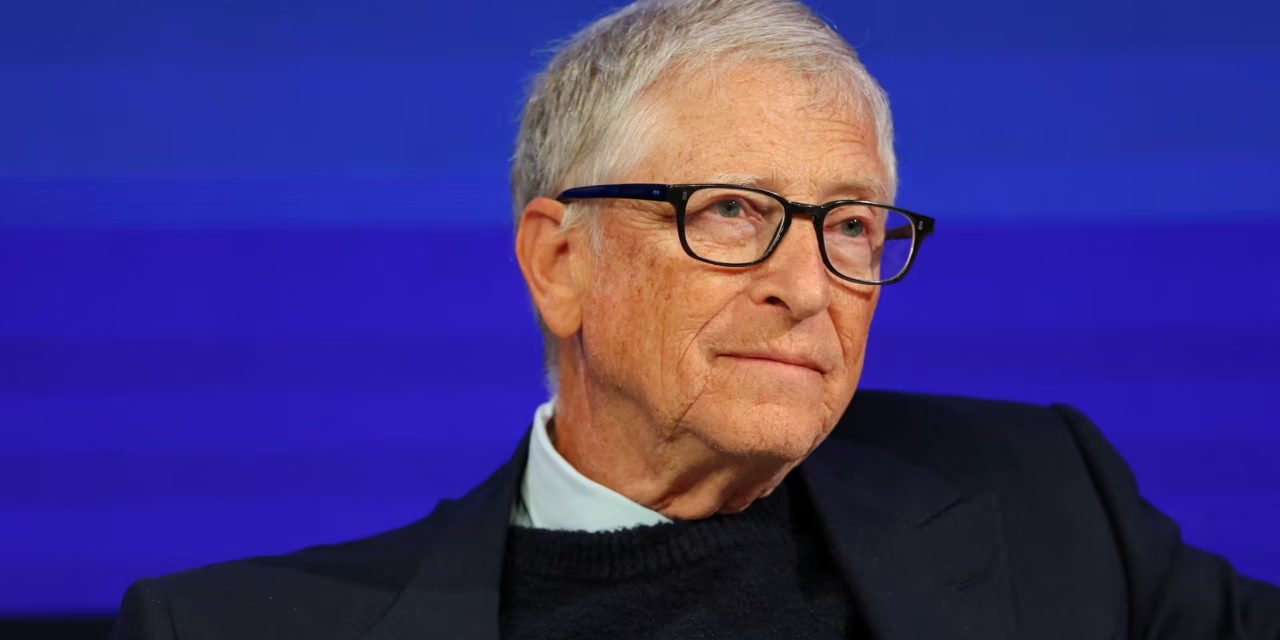
Bill Gates urges global leaders to ensure AI helps poor nations, as his foundation pledges $1 billion to expand access.
Billionaire philanthropist and Microsoft co-founder Bill Gates has warned technology leaders and government officials that artificial intelligence could widen the gap between rich and poor nations if the world fails to act quickly.
To ensure that poor communities receive equal access to life saving technology, the Gates Foundation pledged to spend $1 billion over the next two years to fund artificial intelligence programs across global healthcare, public education, and farming.
Rather than allowing smart software tools to benefit only wealthy companies in developed countries, the landmark financial commitment aims to place low cost digital helpers directly into the hands of village doctors, classroom teachers, and small farmers across developing countries.
The major announcement was formally made by the Gates Foundation in Seattle and New York on Tuesday, September 15, 2026, alongside the release of its tenth annual Goalkeepers Report.
The annual report focuses heavily on how fast-growing computer tools can improve human lives if tech developers design software specifically for low income regions.
Under the spending roadmap, approximately four hundred million dollars will go toward healthcare tools, such as digital software that helps clinic workers spot missed medical symptoms and discover new vaccines.
Another $400 million is designated for education, while $200 million will support small farm agriculture and build computer datasets in underrepresented local languages.
The primary reason Bill Gates is pushing for artificial intelligence equity right now is that early technology models were built primarily using English data and commercial interests, leaving millions of non English speakers without helpful tools.
Left strictly to private market forces, technology companies naturally build products first for profitable clients who can afford high subscription fees.
If global charities and national governments do not step in to fund local language tools and public health projects, poorer populations risk getting left behind in the global technology revolution.
See Also: Elon Musk’s xAI Resolves Antitrust Lawsuit Against Apple Over AI Competition
Investing early guarantees that local doctors and teachers can adapt smart tools to save lives and boost local food production.
Warning that technology companies and world leaders must make intentional choices to protect vulnerable communities from getting left behind, Bill Gates stated in his official report that “left to the market alone, the most capable tools will be built first for the people and institutions most able to pay for them, not necessarily for those who could benefit most”.
Emphasizing that ensuring fair access to technology requires active commitments from both private tech firms and national governments, Bill Gates wrote that “we can harness AI for good. But it won’t happen by accident,” adding that leaders must “measure success not only by what AI can do for the most profitable users but by what it can do for the people who stand the most to gain”.
Highlighting that the next twelve to eighteen months represent a critical window for setting the world on a fair path, Bill Gates added that “we shouldn’t waste any time. In healthcare, for example, whether AI directly helps patients, helps healthcare workers improve their service capacity, or improves the quality of their decisions and follow-up care, all of this means saving a tremendous number of lives”.
By pledging one billion dollars to support fair access to artificial intelligence, the Gates Foundation is establishing a clear precedent for global philanthropy.
Guiding technology toward public health, farming, and education ensures that smart tools benefit everyday citizens across every corner of the world.

About the Author
Jennifer Sakmufuwo Baba is a tech analyst, senior staff, and writer covering artificial intelligence, cybersecurity , and emerging technologies at TechRegard. Based in Nigeria, she's passionate about translating complex tech developments into compelling, accessible stories for diverse audiences. Her work focuses on how technology shapes innovation across Africa and globally.