

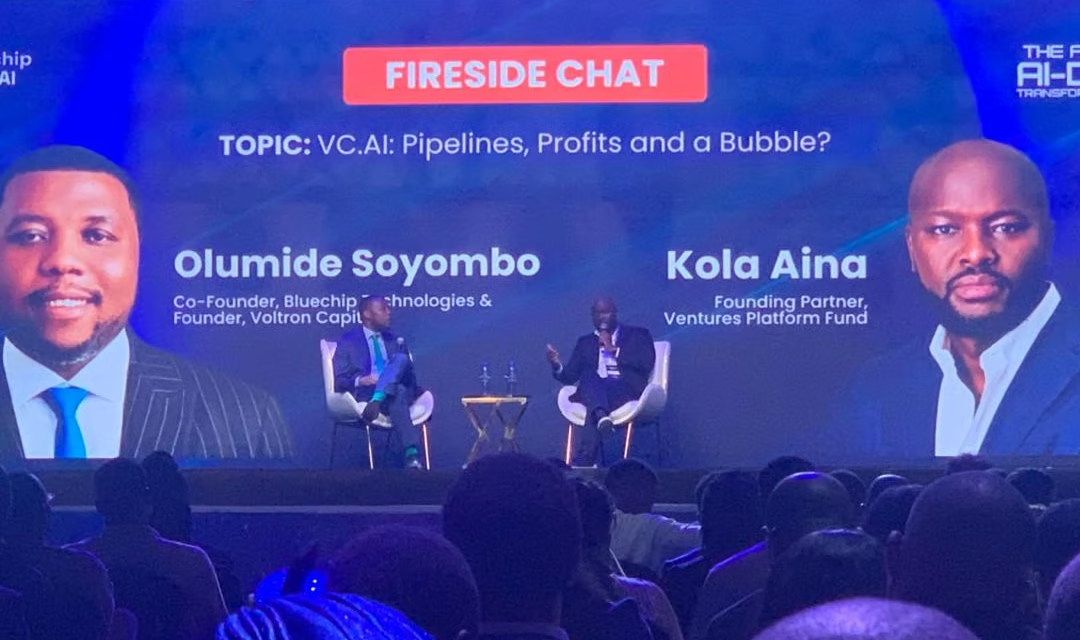
VCs Kola Aina and Olumide Soyombo argue at the Bluechip Summit that AI represents a lasting economic bloom rather than a speculative bubble.
The global financial and technology sectors are locked in an intense debate over the true trajectory of generative artificial intelligence. As valuations climb into the trillions and massive capital infusions dominate headlines, skeptics are loudly drawing parallels to the dot-com crash of 2000. They warn that the market is inflating a fragile bubble destined to burst. However, some of Africa’s most seasoned venture capitalists are offering a decidedly different, more grounded perspective.
According to a detailed report by Condia, this critical debate took center stage at the 2026 Bluechip Data & AI Summit in Lagos, Nigeria. During a fireside chat, Kola Aina, the Founding Partner of Ventures Platform, pushed back against the prevailing doom narratives. Speaking with Olumide Soyombo, Co-founder of Bluechip Technologies and Founder of Voltron Capital, Aina argued that the tech sector is not trapped in a speculative bubble, but is instead experiencing a structural “bloom.”
Why a Bloom Differs From a Bubble
A bubble, by its very definition, is built on hollow speculation that eventually pops and leaves nothing but financial ruin behind. A bloom, conversely, represents the chaotic, crowded birthing of a major economic inflection point. While it involves high competition and inevitable failures, it ultimately leaves behind a deeply transformed and enriched landscape.
Aina emphasized that, unlike the internet companies of the late 1990s, which frequently traded on pure guesswork, hype, and unmonitored burning of cash, today’s leading AI infrastructure builders are anchored by immense, real-world utility. Tech giants like Microsoft are weaving intelligent layers into everyday enterprise software, OpenAI runs a massive commercial business, and Nvidia’s hardware manufacturing drives undeniable industrial value. These entities are generating real, measurable revenue streams, proving that the underlying foundation of the AI boom is tethered to actual commercial demand.
Navigating Hype and “Incestuous” Funding Tactics
Despite his optimism, Aina did not gloss over the warning signs. He openly voiced concerns regarding the reckless, hype-driven behaviors currently playing out across the international startup landscape. He specifically pointed to what he termed an “incestuous relationship” developing between major foundational model providers and their respective corporate backers.
This dynamic creates a closed loop where a cloud giant invests billions into an AI startup, only for that startup to immediately pass those billions right back to the investor to rent their cloud servers. This setup artificially inflates revenue figures for both parties without necessarily introducing new organic value to the market.
Aina admitted that watching startups raise massive, hype-fueled funding rounds, often announced via high-profile media spots on platforms like TechCrunch, can make disciplined investors question their own prudence. Yet, he maintained that long-term success requires evaluating opportunities on a strict, case-by-case basis rather than succumbing to fear of missing out (FOMO).
Blood on the Dance Floor, Value on the Horizon
The ultimate resolution of this technological bloom will not be entirely painless. The market is becoming incredibly crowded, and a correction is inevitable. Both speakers agreed that the industry will see a high volume of casualties as poorly structured applications lose traction.
As detailed in supplementary coverage of the Bluechip Summit’s infrastructure updates, the event brought together over 7,000 tech leaders and policymakers to figure out how businesses can move past the hype and implement data architectures that survive the noise. The overarching consensus is clear: while there will be plenty of “blood on the dance floor” as weaker companies collapse, the enterprise giants built on the flip side of this cycle will form the bedrock of the modern digital economy.


